Monday, March 10, 2014

Yes! John Travolta and Regine Velasquez have sexdaily!


John Travolta hasn’t made a blockbuster movie in ages and so, his star has dimmed quite a bit. But in the few minutes of being a presenter at this year’s Oscars, he once again became an overnight sensation albeit for an embarrassing mistake: He introduced the singer Idina Menzel by a strange name that vaguely sounded like “Adele Dazeem.” 


Travolta’s hilarious flub (or epic fail, as netizens put it) spawned two news words for the dictionary- “travoltify” and “travoltification,” both of which refer to the mangling or butchering of one’s name. The incident also inspired techno-geeks to create a widget called an “Adele Dazeem Generator’ which produces a “travoltified” version of one’s name. Playing around with the Adele Dazeem Generator, it was amusing to discover that John Travolta’s travoltified name is “Jan Thozomas.” That’s how he might have read his own name if he read it from the teleprompter at Oscars Night. 


On a serious note however, the incident placed in the spotlight the condition called ‘dyslexia”- the probable culprit in the travoltification of Idina Menzel’s name.

Famous personalities known to have dyslexia include Tom Cruise, Magic Johnson, Keannu Reeves, Albert Einstein, Leonardo da Vinci, Pablo Picasso, George Washington, Walt Disney, Wolfgang Amadeus Mozart, and Steven Spielberg.


In the local scene, our very own songbird, Regine Velasquez, is a self-diagnosed and self-confessed dyslexic. In an interview with Yahoo! blogger Gerry Plaza, she admitted to being both a slow reader and bad speller who interchanged her b’s and d’s. She admitted to having ugly handwriting and in school, she was allegedly bullied for being perceived as a stupid child. Regine also narrated that it was her strong memorization skills that helped her compensate for the challenges of dyslexia.

Dyslexia is a learning disorder which affects many children. It is characterized by difficulties in reading, writing, and spelling. Experts explain that dyslexics have difficulty in accurately interpreting the printed word and in matching the words with their appropriate sounds. People tend to think that dyslexics are lazy or stupid but in reality, they are generally creative individuals who possess normal or even high IQ. Dyslexia is a life-long condition and it runs in families. In fact, if one parent has it, there is a 50% chance of passing the condition onto the child. Some dyslexics actually enjoy reading, although they may need to read more slowly.


If you’re wondering whether you’re dyslexic or not, here are ten questions for you to assess yourself:

  • Do you dislike reading, especially if the reading material is lengthy?
  • Do you read slowly?
  • Are there times that you don’t read linearly from left to right?
  • Do you omit words or parts of words when reading?
  • Do you reverse the sequence of letters?


  • Do you have difficulty in remembering the sequence of letters, numbers, words, and shapes?
  • Are you poor in spelling?
  • Are you poor in math?
  • Do you make mistakes in reading aloud, and therefore dislike reading aloud?
  • Do you have handwriting which others find ugly or illegible?


If you answered “yes” to 7 or more of the above questions, you probably have dyslexia and need to get help from a specialist. Specialists can teach you strategies on how to improve your reading and writing ability, techniques on how to reduce your stress and anxiety levels, and tips on how to conceal the symptoms of your dyslexia.


As for John Travolta, he really did a courageous thing in attempting to read what was written on the teleprompter. Of course, as a presenter, he has no excuse for not knowing beforehand who he was going to introduce.  Hopefully, he learns from his mistake, laughs off the flub, and moves on in life. 


It’s a good thing though that the phrase “I have dyslexia” wasn’t written on the teleprompter. Can you just imagine how the audience would react if John mistakenly read it as “I have sexdaily.”?

Wednesday, February 26, 2014

The Portrait of Pinoy Politicians as Kleptomaniacs


The Senate investigation of the pork barrel scam has all the makings of a hit “teleserye” or reality TV show. It has elements of drama, suspense, comedy and even an alleged May-December romance. The twists and turns in the storyline result from all the mind games, blame games, delaying tactics, and diversionary schemes that throw the investigation off track. The plot of course revolves around the theme of plunder, which can also be referred to as “political kleptomania.” 


Kleptomania comes from the combination of two Greek words for “thief” and “madness.” Kleptomania is characterized by the inability of a person to resist the temptation or urge to steal. It is important though to differentiate psychiatric kleptomania from political kleptomania. Psychiatric kleptomaniacs steal objects of little value for no other purpose than the heck of it. On the other hand, political kleptomaniacs refer to those government officials and politicians who illegally acquire vast amounts of wealth for personal gain. Political kleptomaniacs are also called “kleptocrats.”


What are the psychological factors that transform some politicians into kleptomaniacs?

  • Measure of success. For some politicians, the fatness of their bank accounts determines how high they’ve made it up the socio-eco-political ladder. These people acquire excessive wealth because for them, wealth equals success, power, and prestige. 
  • Poverty mentality. Some politicians who come from humble backgrounds have risen up the ranks yet continue to harbor a self-perception of being poor. They become compulsive hoarders of material wealth as if they were in a constant and insatiable state of deprivation. 
  • Sharing the loot. Some politicians believe that it is acceptable to steal as long as some of the loot is used for charitable or religious projects. For them, sharing a little portion of the loot has the effect of lessening their guilt. 
  • Copycat thievery. Many politicians pick up the shady habits of their corrupt predecessors and colleagues. In this sense, corruption is like an inheritable illness or contagious disease.


  • Self-reward for stress. Some politicians feel unfairly compensated for all the effort they pour into their work. Since they believe that the government is not paying them enough, they exaggeratedly augment their own salary by hook or by crook.  
  • Banking on Pinoy compassion. Corrupt politicians may not be too fearful of being caught for their crimes because Pinoys have shown a track record of easily forgiving past political leaders who have committed plunder. 
  • Supporting their networks of patronage. Some politicians engage in massive thievery in order to pay off, reward, or give incentive to the people and institutions that back them up. 
  • Preparation for comfortable retirement. Some politicians amass wealth because they want to sustain an affluent lifestyle after their retirement.
  • Potential of power to corrupt. A person in high office is always vulnerable to temptation. The historian John Acton put it well in stating that “Power tends to corrupt and absolute power corrupts absolutely.”


  • Narcissistic personality. Some politicians are narcissists who have an inflated view of themselves. Considering themselves to be superior and special beings, they feel that they are above the law and feel entitled to the use public funds as if it was theirs. 
  • Criminal-mindedness. People with criminal tendencies are sociopaths who often con people for personal profit. Sociopaths have a calloused conscience and do not display any remorse for their offenses. 


Kleptomania is commonly treated through aversive conditioning. Aversive conditioning is nothing more than the quick application of stern but non-abusive disciplinary action immediately after the stealing is committed. In the olden days, electric shocks and other forms of physical torture were inflicted as inhumane punishments for kleptomania.

Politicians have their high office as a venue either to showcase their virtues or to cultivate their vices. For politicians who choose the latter, they need to be justly penalized and be taught these 3 basic lessons in life:  


  1. that corruption is not a privilege of politicians,
  2. that in the long run, crime does not pay, and 
  3. that no one should ever consider himself or herself to be above the law. 


Monday, February 10, 2014

Survival Guide for the Broken-Hearted


Whether you're a guy or girl, mending a broken heart is never easy to do.  Experts say that it can take anywhere from 6 months to 8 years for you to get over the heartache from a breakup.  In fact, many clients of mine talk about their heartaches as if it was just a recent event, even if it happened many years or decades ago. 


Being broken-hearted is like plunging into a hell of deep dark emotions.  You’ll experience cyclical waves of emptiness, disbelief, disillusionment, devastation, grief, guilt, loneliness, depression, bitterness, rage, and confusion.  However, with the passage of time, the heavy emotions should slowly subside.  


In my many years of counselling one broken-hearted person after another, I've learned from them some strategies that speed up the process of emotional healing:

  1. First of all, accept that it’s all over!  Like your own failed relationship, some relationships aren't meant to last. Accept the fact that your “ex” came into your life just for a reason and for a season.  But for a lifetime? Nah!
  2. Grieve and don’t resurrect a dead relationship.  Not only have your plans and dreams as a couple ended, but a big chunk of your inner being has died too.  Grieving is the heart-wrenching process of putting closure to another chapter in your life.
  3. Kill the hope!  As long as you keep alive a tiny spark of hope for reconciliation, you are NOT going to move on!  As long as you still harbor the fantasy or wish of getting back together, the emotional roller coaster ride is going to continue.  
  4. Give up plans of revenge, and put your "evil" side to rest.  If you take revenge, you'll just be giving your “ex” more reasons to validate the breakup.  You'll come out as the bad guy and you'll certainly regret your wicked deeds later on.  Furthermore, if you take revenge, this only means one thing:  that you still haven't accepted the fact that IT'S ALL OVER!
  5. No relationships on the rebound please.  If you jump into a relationship right after your breakup, it'll mean one of four things:  (1) You're doing it as a desperate attempt to make your “ex” jealous; (2) you're doing it as an attempt to escape from your loneliness; (3) you're doing it to make your “ex” think that you’re coping well; or (4) you're doing it as a premature attempt to move on.  Truth is, you only make matters worse by entering into a rebound relationship.  Finish your grieving process first and be a whole and happy person again before embarking on a new relationship.  
  6. Get emotional support from family and friends.  Your breakup may have made you feel emotionally bankrupt.  Since you’re driving on empty, start guzzling down the warmth and care of people who love you.  Don't stay isolated.  Even if you don't feel like socializing, allow your family and friends to temporarily distract you from your heartache.
  7. Distract yourself with activities.  When you're tired from wallowing in sadness, distract yourself by watching TV, listening to upbeat music, learning a new sport or craft, pampering yourself with massage, and so on and so forth.  Remember:  any distraction is better than none.
  8. Stop stalking and spying on your “ex’s” Facebook and Twitter account. Every new detail you learn about your “ex” is only going to mess up your mind!
  9. Develop a spiritual perspective.  Spirituality teaches you the great lesson that you cannot permanently hold on to anything and anyone in this life.  For some circumstances in our life, the appropriate thing to do is to simply “let go and let God."
  10. And lastly, get professional help if you start hurting yourself (by self-cutting or alcohol/drug abuse), become suicidal, or feel that you're depression is worsening.  You may be suffering from major depression which can prevent you from moving on.  


Recovering from a break-up is a deathly slow but natural process.  Have faith in knowing that “time heals all wounds (or at least, most wounds).”  And when your inner wisdom senses that you've recovered enough to move on, you’ll naturally gain the strength to crawl out of your dark emotional pit and start living life all over again.


Wednesday, January 29, 2014

The Psychology of Acquaintance Rape: Does Vhong Fit the Profile of a Rapist?


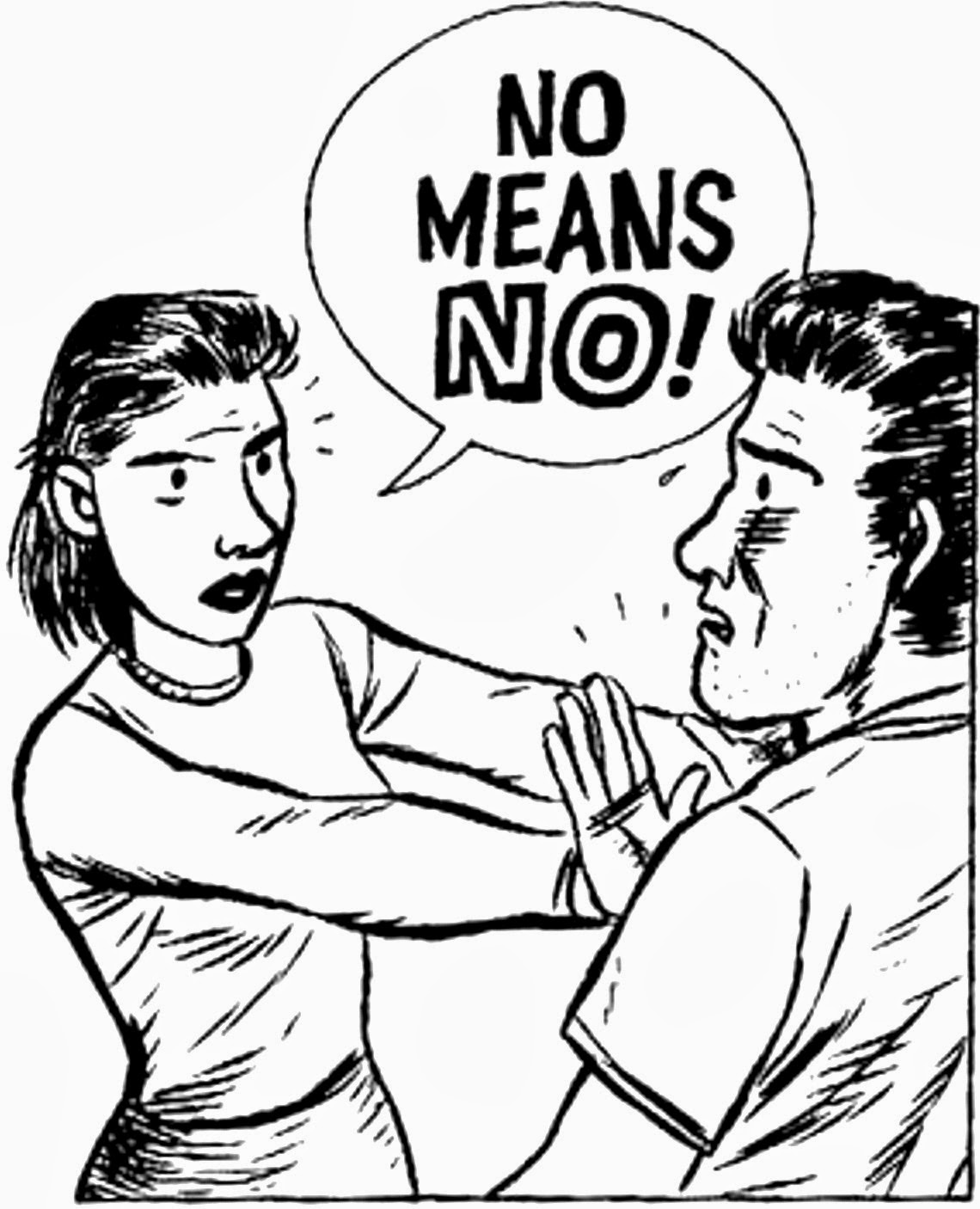
As the trial by publicity of Vhong Navarro and Deniece Cornejo continues, the foremost question on everyone’s mind is whether Vhong Navarro really raped Deniece Cornejo or not. Whoever you believe to be victim or villain, the Vhong-Deniece incident has brought to the spotlight an all-too-common but ignored issue faced by women worldwide- that of acquaintance rape. 


Rape is the crime of coercing or manipulating another person to engage in sexual intercourse. 

Contrary to popular belief, most rapes are not committed by strangers lurking in the shadows. In fact, the most common form of rape is committed by someone whom the victim knows: an acquaintance, a friend, a neighbour, an authority figure, a relative, or even one's spouse (as in marital rape). This type of rape is called "acquaintance rape."


Even if two people were sexual partners in the past, this does not mean that rape cannot occur. Rape is rape as long as the sexual activity between two people is non-consensual. 

When rape happens in the context of a dating relationship, it is known as “date rape.” Date rapists often get their victim drunk with alcohol, stoned on marijuana, or intoxicated by a drug-laced drink. These substances usually have an effect of making the victim either ‘horny’ or physically weakened to the point of not being able resist the rapist.


However, not all acquaintance rapists use brute strength to obtain sex. Some rapists terrorize women through threats or blackmail.

It is natural for women to put up a fight against the rapist. Unfortunately, some rapists get more sexually excited by women who play hard to get and who resist their advances. 


On the other hand, some women get overtaken by terror and simply submit to the rape for fear that they may get beaten, tortured, or killed. In this case, submitting oneself to being raped is a survival strategy and should not be mistaken for consensual sex. Sadly, women who do not struggle and who “give in” to the rapist are unfairly judged as having “asked for it.” Oftentimes, these victims of rape are blamed for having encouraged or seduced their assailant.

As to the question of whether Vhong Navarro fits the profile of a rapist or not, unfortunately, there is no common or typical profile of a rapist. An acquaintance rapist is indistinguishable from anyone else. We cannot tell who a rapist is based on their age, physical looks, socio-economic status, educational attainment, religious involvement, and even from the psychological tests. Rapists come in all forms and might even be well-liked and highly-respected figures in their community. Each rapist is different in their personality traits, their motives for rape, and their “style” of raping.


What we do know are possible factors which can contribute to a man’s tendency to rape. These factors include:

  • Espousing the belief that real men should be able to "score" by hook or by crook.
  • The use of alcohol and drugs which causes an increase in sexual impulsivity and sexual aggression. 
  • Being in the company of sexually aggressive or sexually impulsive male friends.
  • The consumption of pornography which depict sado-masochistic themes, blatant sexual abuse, or rape scenes.

The five common ingredients for rape to occur are the following: 
  1. A secluded location,
  2. the presence of a woman,
  3. a horny guy,
  4. the use of an intoxicating substance, and 
  5. the likelihood of not getting caught in the act. 


Having counseled many victims of acquaintance rape, I notice that they tend to keep the traumatic incident to themselves. They blame themselves for what happened and fear that their story is going to be disbelieved or belittled by others. At times, confusion sets in as they wonder whether they are just making a big deal of the incident since the assailant was their acquaintance anyway. It is only when rape victims break their silence and undergo counselling that they emotionally heal and move towards recovery.

As for prevention of acquaintance rape, the simplest tips for women are these:
  • Avoid getting drunk or stoned.
  • Avoid secluded places.
  • Trust your instincts.
  • Immediately leave a guy who makes you feel any bit nervous or uncomfortable.


Whatever official verdict is made on the Vhong Navarro-Deniece Cornejo incident, the public is now aware of how intricate a problem acquaintance rape can be. In the absence of any hard evidence regarding the rape, it becomes a case of "Deniece's word against Vhong's."  Indeed, acquaintance rape is a serious and complicated problem.  People therefore now need to learn about it, stand up against it, and learn how it can best be prevented.  

Wednesday, January 8, 2014

What is it Like to Use Weed?


Marijuana in Filipino slang is called “jutes,”chongki,” or simply “damo.” This plant, scientifically known as cannabis, has grabbed the spotlight especially after Colorado became the first American state licensed to sell recreational marijuana. 


In the Philippines, weed is an illegal psycho-active substance which is widely available:  It is easily shared among friends; it is served as food in parties; and reports even have it that weed is sold to students by tricycle drivers in the university belt. 

Because of the culinary craze in this country, users have creatively incorporated marijuana as an ingredient in food and drinks. In fact, one user I know, for lack of culinary creativity, simply sprinkles the dried marijuana leaves on bread, using it as “palaman” for sandwiches. 


As an addictions counselor, my clients narrate to me their experiences of being on weed:  Most of them smoke it as a ‘joint’ or inhale a vaporized version of it. After a minute or so, they start feeling its effects. The effects gradually intensify in around 15-30 minutes and wear off after a few hours.


How weed psychologically affects users is influenced by many factors:

  • The time it is taken
  • The ambience of the place
  • The mood of the user
  • The metabolism of the user
  • The manner it is taken (whether inhaled or ingested)
  • The frequency of its use (whether occasionally or regularly)
  • The amount of marijuana
  • The quality and variety of the weed used. 


Being a plant, marijuana is considered organic and is likened to tobacco. Unlike tobacco however, its psychological effects are unpredictable for its users. People can get a euphoric “high” from using weed, or they may experience a traumatic “bad trip” from it. Marijuana, for instance, can result in the following effects:

  • Relaxation or intense panic attacks
  • Alertness or tiredness/sluggishness
  • “Food trips” or loss of appetite
  • “Laugh trips” or flashbacks of traumatic memories
  • “Sex trips” or erectile dysfunction
  • Creative solutions or impractical ideas
  • Profound realizations or silly insights
  • Increased sociability or avoidance of people
  • Mental calm or paranoia/hallucinations


Certainly, medical marijuana can help some people manage their anxiety, depression, post-traumatic stress disorder, insomnia, and anger management problems. However, medical marijuana is not for everyone.  It should be used occasionally or only on short-term basis, and its use should strictly be supervised and monitored by a physician.

In my clinical experience, frequent and heavy long-term weed users carry a higher risk of getting confined in a psychiatric facility for 3 main reasons:

  1. they develop an addiction, 
  2. they develop psychiatric illnesses such as major depression, anxiety disorder, or schizophrenia, or
  3. they develop an “amotivational syndrome” wherein they get too "chill" and become “lazy bums” in the process, losing all interest and motivation for school or work. 

Weed can produce pleasant psychological benefits as much as it can cause deep and permanent psychological harm. Clearly, the bottom line about marijuana use is this: you either get stoned on it, or stoned by it!


Monday, December 23, 2013

The Chronic Fatigue Syndrome of Senator Miriam


For Miriam Defensor-Santiago to add another feather to her cap is “ho-hum” news. It’s not surprising to know that of all 24 senators, she was the one who churned out the highest number of bills and resolutions for 2013.  Being the workhorse that she is, that would have been completely expected.  The real shocker however is that Senator Miriam accomplished her feat despite being afflicted with the debilitating disorder known as chronic fatigue syndrome.


To give you a feel of what chronic fatigue syndrome is like, just imagine yourself feeling physically wasted, mentally exhausted, and emotionally drained.  And then imagine having to stay in this weakened condition for weeks, months, or years!

As the name implies, chronic fatigue syndrome is characterized by long-term fatigue. It is a debilitating disorder since it disrupts one’s social life, work life, and family life. For Senator Miriam to have this disorder, it would mean that she experienced most, if not all of the following symptoms:
  • Extreme tiredness after minimal exertion
  • Extreme tiredness which persists despite enough rest
  • Medically unexplained body weakness, muscular aches, joint pains, and headaches
  • Insomnia or unrestful sleep
  • Forgetfulness and/or poor concentration
  • Sore throat and lymph nodes in the neck and/or armpits
  • Other respiratory, cardiac, and/or digestive problems.


The cause of chronic fatigue syndrome is unknown.  Medical doctors think that it may be due to a viral infection, hormonal imbalance, or a problem with the immune system.  Some psychiatrists have a tendency to think that it might be a variant of major depression, hypochondriasis, or burnout from prolonged and intense stress.  As for Senator Miriam, her chronic fatigue syndrome was reportedly traced to a vitamin D deficiency. 

The treatment of chronic fatigue syndrome usually consists of:
  • Symptomatic treatment for the body aches and pains
  • Antidepressant medication
  • Nutritional supplementation
  • Health coaching
  • Stress reduction
  • Wellness therapies such as meditation, gentle exercise, acupuncture, hypnotherapy, cranio-sacral therapy, massage, and other mind-body therapies.


Having had a first-hand experience of the condition, Senator Miriam filed Senate Bill 3195 which aims to increase public awareness of chronic fatigue syndrome. This campaign is important since many patients who suffer from chronic fatigue syndrome don’t even know what their sickness is and what they can do about it. 


Clearly, Senator Miriam should serve as an inspiration to many. If she can be a top notch senator despite being afflicted by chronic fatigue syndrome, it boggles our mind just to imagine what Senator Miriam can accomplish if she didn’t have that dreaded disorder to bog her down!  


Saturday, December 14, 2013

The Commercialization of Christmas: In Which Mall Would Christ Do his Christmas Shopping? (Or Would Christ Even Celebrate Christmas?)


Filipinos pride themselves in having one of the longest Christmas seasons is the world. And this year, the season got even longer. As early as August, Christmas tunes had already been playing in some malls. This is clear proof of how commercialized the Filipino Christmas season has become.

In the movie “A Charlie Brown Christmas,” Charlie Brown’s friend, Lucy, describes Christmas as “one big commercial racket!” And while hers is a cynical remark, no one can deny the truth of it. Businessmen know that their last chance at earning big bucks lies in the last quarter of the year. Of course, the only remaining strategy for raking up sales is to exploit Christmas by hyping it up as the “season for (buying and) giving.”

Christmas commercialism has become somewhat like a new religion. In this religion, Santa Claus replaces Jesus as the “reason for the season.” If we are honest about it, Jesus' birth is used as the “excuse” for celebrating a season marked by materialism, commercialization, and hedonism. The truth is, except for a few random thoughts about Jesus, we hardly think about him during the holidays. Instead, our energies are focused on buying exchange gifts for Kris Kringle, decorating our homes and offices with parols and Christmas trees, and practicing “oppa gangnam” and “twerky” dance numbers for the Christmas parties.

In Santa’s religion, we, as his devout followers, flock not to church but to shopping malls and parties. Spiritual activities get replaced by compulsive shopping, gift giving, food bingeing, and revelry. And despite Christianity’s strong condemnation of the “seven deadly sins,” at least two of those deadly sins, namely, avarice (greed) and gluttony are most blatantly practiced during the Christmas celebrations! Whether we accept it or not, Christmas has devolved into a most un-Christian of seasons.

Those observant will also notice the slow and subtle “secularization” of Christmas. This simply means that the religious elements of Christmas are getting “phased out.” Take for instance the following developments:


  • Traditional images of Jesus' birth are now regarded as old-fashioned, boring, or too churchy. While Christmas can exist without images of the baby Jesus, today’s Christmas can never be complete without images of Santa Claus, Christmas trees, and candy canes. 
  • So as not to offend people of other faiths, the “Merry Christmas!”greeting is now getting replaced with more politically-correct forms of greeting such as “Happy Holidays!” or “Season’s greetings!” 
  • In narrating the story of Christ’s birth, undue emphasis is given to the three magis/kings who gave Jesus the gifts of gold, frankincense, and myrrh. This portion of the Christmas story is the real culprit behind Christmas materialism.  Ironically, we ignore Jesus’ parents even if they are the real heroes of the Christmas story.  You can, for instance, imagine Mary's ordeal, as she suffered labor pains all throughout her trip to Bethlehem, up until she gave birth to her child in an unsanitary animal house! 


And so, if we go by the trend, we see that Jesus is sneakily getting shoved to the sidelines. For all we know, Jesus himself may one day get eradicated from the very season dedicated to him! And with Santa’s materialistic values lording over the holidays, “Christ-mas” should more aptly be renamed “Claus-mas!”

In discussing the secularization and commercialism of Christmas, this is not to suggest that we become ascetic and shun all manner of materialism and fun during the holidays. After all, gifts can be used as a tangible way of showing our affection to family and friends. And as for having fun during holidays, it is the natural way to de-stress and recharge at year’s end.

What this article does suggest is that amidst the noise and chaos of the Christmas holidays, perhaps we can momentarily retreat from our worldly concerns and give ourselves the much-needed gift of some quiet soul-searching. In spiritual solitude, we can reflect on the following questions:

  • What struggles did I face this year, and what was God teaching me through them? 
  • How could I have handled those struggles in a more mature way? 
  • What is God teaching me to accept? 
  • What is God teaching me to let go of? 
  • What should I be grateful for in this year that passed? 
  • What can aid me in my on-going journey towards spiritual growth and maturity? 
  • How can I translate my spirituality into action? 


From the Christmas story, let us draw inspiration from Joseph and Mary who, through their strength of spirit, overcame the difficult circumstances surrounding their child’s birth. And more importantly, let us draw hope from the story of Jesus’ birth, which speaks of God’s fervent desire to be present among us and be intimately involved in our lives.